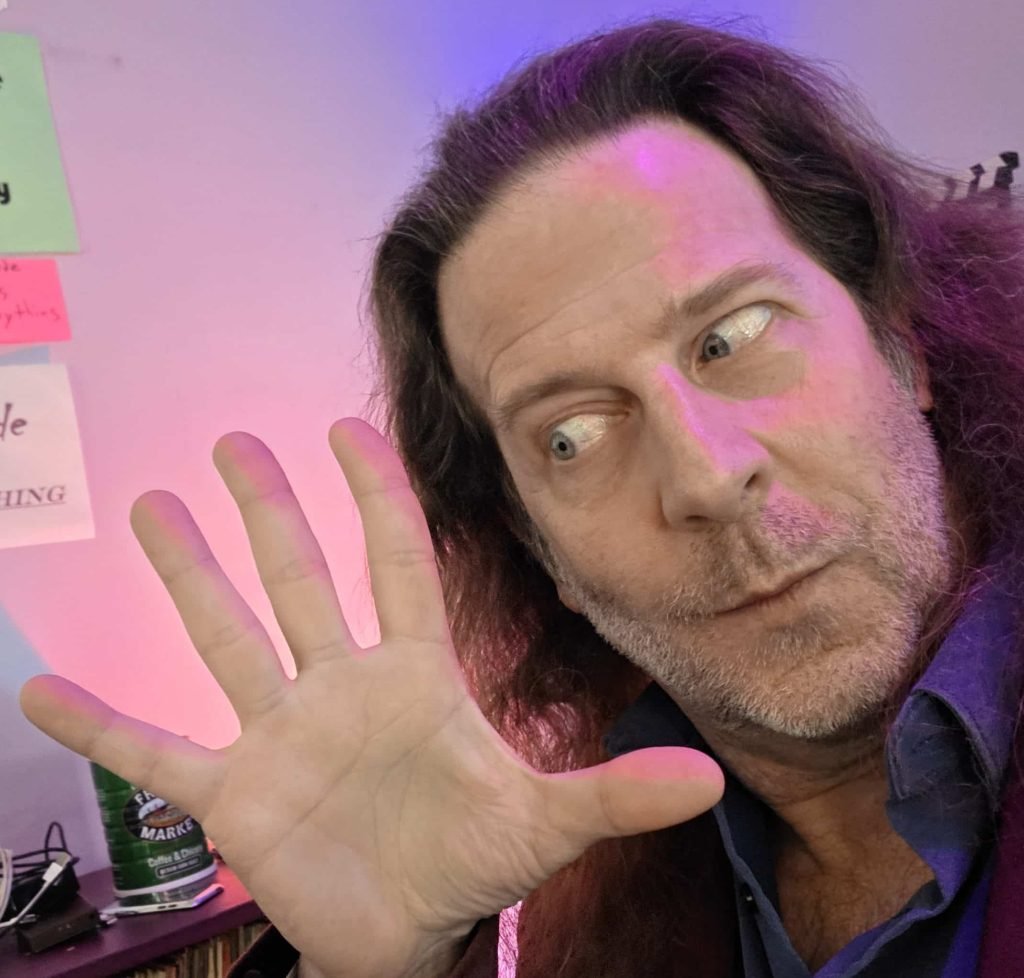
The Thinking Wizard
After a long and winding journey down the Yellow Brick Road, Dorothy finally stands before the great and powerful wizard. She’s faced many challenges, found unexpected companions, and unearthed the courage, heart, and intellect she thought she lacked. But now, standing in the emerald glow of the Wizard’s chamber, something doesn’t feel right. The grandiosity of the wizard’s presence seems hollow, and a curtain sways slightly in the corner of the room. Dorothy pulls the curtain back, revealing an ordinary man, a mere thinker, frantically pulling levers and pushing buttons, trying to maintain his illusion of power. Now that we have touched the essence of awareness, our next step is to become aware of our thinking. The first step down this Yellow Brick Road is to ask yourself, “What are You Thinking?”
Most schools teach students to think critically, analyze problems, and find solutions, and I enjoy the irony in teaching the ability to ignore the thinking process. There lies a paradox regarding peak performance in any skill requiring precision and creativity in the flow of time, and thinking often gets in the way. Our thinking process can be a double-edged sword. It can help us solve problems, ask questions, and make sense of complex ideas, but it can also be the very thing that holds us back, especially when trying to perform at our best. This is particularly true for musicians. When we’re in the middle of a performance, the last thing we want to do is think about how to play an instrument we already know how to play. In our previous episode, we became aware of “Awareness” by peeling back the layers that shape our perception and discovering the often elusive yet powerful state of mind where we recognize our consciousness and how it interacts with the world around us. Our next step is to see what we think about thinking, traversing further down the Yellow Brick Road to understand our thinking process.
Unveiling the Wizard
The mighty Wizard held sway over the Emerald City in Oz. He was seen as all-powerful, an enigmatic force capable of granting the deepest desires of those who sought him out. But behind the curtain, as Dorothy and her companions discovered, the Wizard was merely a man pulling levers and pushing buttons. The grand illusion of his power was simply a show of lights and sound. Once unveiled, the Wizard was no longer feared. His real value lay not in the illusion but in the guidance he could offer. Our thinking works much the same way.
Let’s step into the Emerald City of our mind and visit the Wizard. He’s hidden behind that curtain, pulling all the levers that make the gears of our thoughts turn. He’s been doing this for so long that we’ve forgotten to question him. The wizard is an old friend, the voice in our head that is so familiar it may be difficult to ignore, but what happens when we finally become curious enough to peek behind the curtain? At first glance, our thoughts seem all-powerful. They direct our actions, color our emotions, and shape our perceptions of the world. They appear to control everything, just like the Wizard controlling his machines. But what if we could pull back the curtain? What if we could see our thoughts for what they are—just a set of tools and controls, not an all-powerful force?
Observing the Wizard
When we begin to observe our thinking, we realize that the Wizard of our thoughts is not as all-powerful as we once believed and, sometimes, not on our side. He is constantly second-guessing and slowing us down. Dorothy’s actions flow freely with trust in her instincts and without second-guessing from the wizard. Without the Wizard’s interference, actions flow naturally and effortlessly. Dorothy’s automatic response to the Scarecrow catching fire wasn’t a result of thinking but a subconscious reaction driven by her instinct to help. Had she stopped to think, her actions would have been delayed. This accidental melting of the Wicked Witch was due to Dorothy’s quick, unthinking response. The power of thought is not in its mystery or illusion but in our ability to understand and work with it.
Observing the Wizard at work gives us insight into how our thoughts operate. We notice the repetitive patterns, the familiar scripts, and the emotions they trigger. We see how easily we’ve been fooled by the smoke and mirrors, believing our thoughts control us entirely. But when we see the Wizard clearly, we understand that we can step in and take over the controls ourselves. It’s as if we suddenly find ourselves standing beside the Wizard, watching him at the helm. We see the levers he’s pulling, initiating habitual patterns and the automatic thoughts that lead to automatic reactions. But now, instead of being controlled by these thoughts, we have a choice. We can take control of the levers, directing our thoughts in ways that serve us better.
Wizard Awareness for Peak Performance
Like Dorothy and her companions, we discover that what we’ve been searching for has been within us all along. The Wizard may have guided us, but the real power was never in his hands—it was in ours. When our thoughts align with our intentions, we can achieve anything. The Wizard, stripped of his illusion, becomes our ally, working with us rather than controlling us. But we must be vigilant. The Wizard is a master of illusion, and our thoughts can easily trick us into believing they are more potent than they are. We must constantly pull back the curtain, reminding ourselves that thoughts are just tools. They don’t define us, and they certainly don’t control us unless we allow them to.
Ultimately, the journey to the Emerald City wasn’t about finding external power or wisdom. It was about discovering what was already within—the heart, the courage, the intelligence to guide our lives. And so it is with our thinking. When we see it for what it is, we can work with it, not against it, though some days, the mind doesn’t seem to be on our side. When we become the true masters of our minds, our unified mindset can achieve great things. We stop letting the Wizard control us from behind the curtain as the wizard learns to trust the magic of the subconscious mind. Trust will settle the emotions that tighten up our muscles, like fear or doubt, and when the wizard is relaxed, the subconscious mind’s peaceful focus is achieved.
The Thinker and the Subconscious Mind
The subconscious mind is a remarkable force that operates silently and efficiently behind the scenes. It’s the part of us that keeps our heart beating, lungs breathing, and body functioning, even while we sleep. It doesn’t need the constant chatter of the thinking mind to do its job. The more the wizard (the thinker) tries to control, the more it interrupts this natural flow.
When we’re too caught up in our thoughts, trying to manage every little detail while worrying about outcomes and overanalyzing situations until we can’t think straight. We create tension that can disrupt the subconscious mind’s natural rhythm. This is why, in moments of peak performance, whether in music, sports, or any creative endeavor, you’ll often hear, don’t overthink, and why the signs on the studio wall are, “Don’t think, just play.” In these moments, we trust the subconscious mind, letting it guide us effortlessly without interference from the overbearing wizard.
Trusting the Subconscious
The real challenge is learning to trust the subconscious mind—the part of us that doesn’t rely on constant thought to function. This requires letting go of the need for control and allowing our deeper instincts to guide us. It’s about recognizing that the mind’s constant chatter is often just noise, and beneath it lies a wellspring of wisdom that knows how to navigate life’s complexities easily.
When we trust the subconscious mind, we stop taking things so personally. We understand that not every situation requires our intervention or judgment. We become less reactive and more present, able to enjoy life’s moments without the weight of self-consciousness. The wizard loses his power when we realize we don’t need him to direct every aspect of our lives. Instead, we can rely on the quiet, steady presence of the subconscious mind, which is always there, doing its job without fanfare.
Mastering The Wizard
“As a man thinketh in his heart, so is he. Our thoughts are not mere fleeting moments that disappear into the ether, but they are the seeds of our reality. Every action we take, every word we speak, begins with a thought.” from James Allen’s “As A Man Thinkith.”
The journey doesn’t end with just recognizing the thinker. Dorothy still had to get home after revealing the wizard. We must move beyond mere awareness. Once we see the thinker, we can observe their habits and learn their tendencies to cultivate better thinking habits. We take control, directing our thoughts purposefully and shaping them into tools for growth rather than obstacles.
Just as Dorothy learned to trust her instincts and inner strength, we, too, must learn to observe our thinking, understand its habits, and guide it toward thoughts that serve our highest purpose. When we become the master of our thoughts rather than letting them master us, we achieve true freedom and creativity.
Be a Wizard at Thinking
“A person is limited only by the thoughts that he chooses.” James Allen’s “As A Man Thinkith“
In music and life, mastering the mind means becoming the true master of our actions. We move beyond second-guessing and hesitation, embracing the flow of our performance. We allow our deepest instincts and training to shine when we stop thinking, leading to a more authentic and powerful expression. The wizard no longer controls us but is unified with our goals, and we control the wizard.
Like the wizard behind the curtain, our thoughts pull the levers of our emotions, actions, and, ultimately, our destiny. But, like Dorothy, many of us move through life unaware of the thinker behind the curtain. We allow our thoughts to operate on autopilot, guiding our lives without question. These habitual thoughts—often a mix of fear, doubt, and worry—shape our perception of the world and ourselves. We become trapped in a self-fulfilling cycle of thoughts and actions, never realizing we can change everything.
Moving Beyond the Thinker
In the end, Dorothy discovers she has the power to return home all along. She didn’t need the wizard to grant her anything because everything she needed was already within her. The same is true for us. When we learn to recognize the thinker, cultivate good thought habits, and let go of control, we discover the most significant powers within our minds and enjoy the freedom to use them.
So, what are you thinking? Are your thoughts serving you? Are they helping you become the person you want to be? If not, pull back the curtain, meet the wizard, and start guiding your thoughts toward a life of possibility and purpose. Mastering the mind is a lifelong journey, much like learning an instrument. You are the architect of your destiny. Shape your performance by mastering your mind.